Beyond RTP
History, challenges, and a possible future for the Triangle's technology scene


Correction: An earlier version of this article incorrectly stated that startups had to pay for pitch slots at Venture Connect. This was inaccurate - founders were not required to pay to pitch at the event. The article has been updated to reflect this, and I apologize for the error.
In 1959, North Carolina's leaders made a bold play to transform a poor, agrarian state into a tech hub. They carved out a pine forest between Raleigh, Durham, and Chapel Hill and christened it "Research Triangle Park (RTP)." As the years past, it became clear that the bet worked. RTP dramatically raised the region's income and enhanced its reputation.
Last week at CED's Venture Connect summit in Raleigh, I found myself reflecting on how far North Carolina's Triangle has come as an innovation ecosystem, and how far it still has to go. As I walked the halls where todays' young startups pitched and investors shook hands, challenged founder optimism, and nodded politely, I felt a mix of pride and frustration. My own career in technology began with a graduate degree in Statistics from UNC-Chapel Hill, and I continue to be impressed by the intellectual rigor of graduates from the region, but I also see a continued exodus of talent, especially new grads, to other entrepreneurial ecosystems.
Maybe that's changing. One one hand, the universities have given birth to dozens of notable companies and it's become easier to raise capital from anywhere in the world. There region is also home to amazing talent working at these universities and larger companies. On the other hand, local capital is relatively scarce and conservative, and recent trends have rewarded founders who show up in-person to the nation's centers of capital, Silicon Valley and New York. And the region's conservative roots and history of attracting big companies and government grants has created a culture that values stability and scale over entrepreneurship.
What's the Triangle's path to becoming a top-tier entrepreneurial ecosystem? Let's start with the history.
Academic Roots and the Birth of Computer Science in the Triangle
In the 1960s, Duke University, UNC-Chapel Hill, and NC State all bet early on the rising field of computer science. UNC-Chapel Hill established its computer science department in 1964 under Turing Award-winner Frederick P. Brooks Jr., making it "the second-oldest standalone CS department in America." NC State followed suit in 1967 by creating its own "Department of Computer Science," and Duke launched a computer science program in 1971 that became a full department by 1973. These efforts attracted and trained a generation of talent that would become the Triangle's early tech success stories.
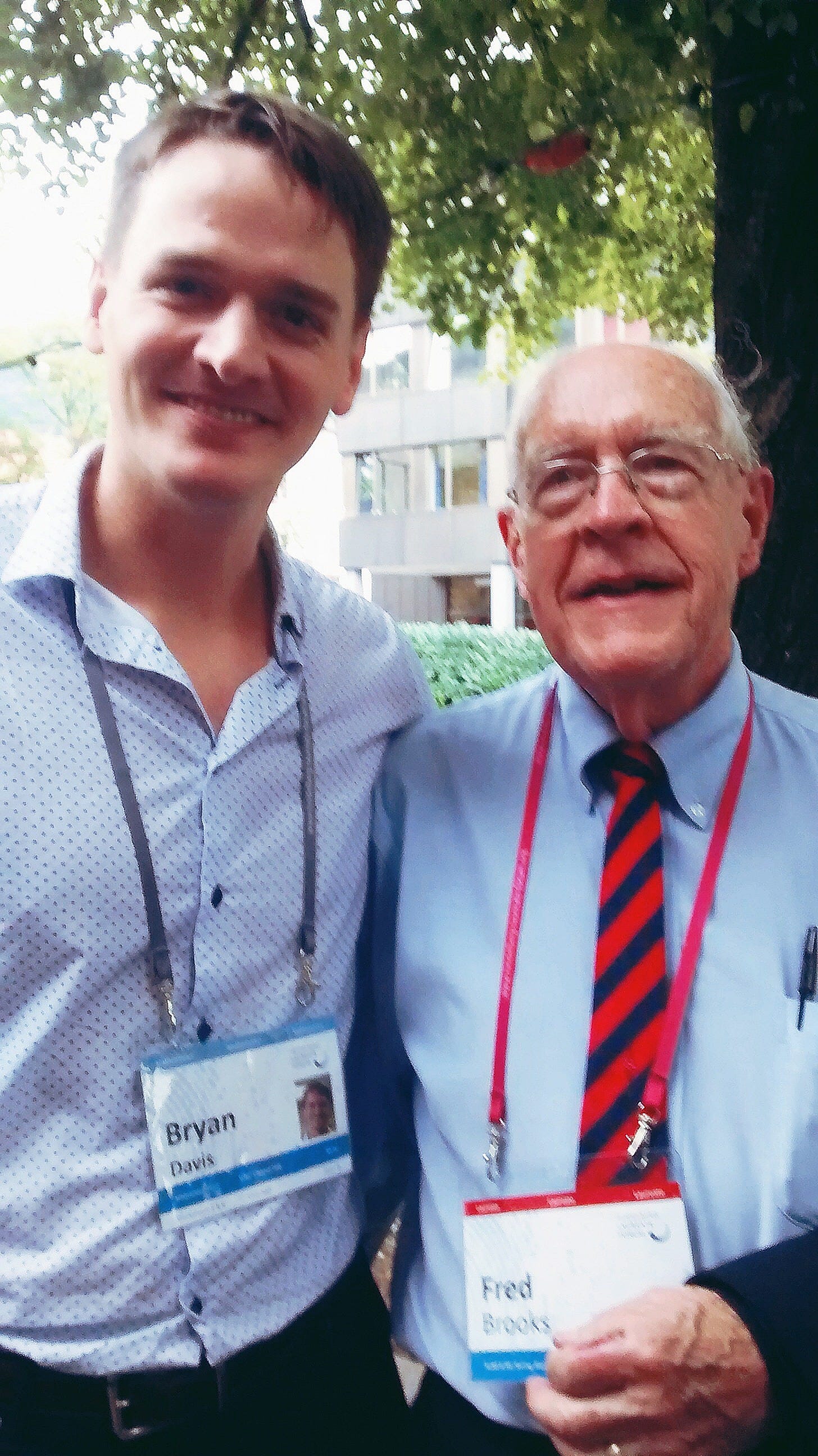
It wasn't just isolated academic departments – the universities also collaborated. In 1965, they jointly founded the Triangle Universities Computation Center in the newly formed Research Triangle Park, creating one of the world's largest university computing centers at the time. This culture of cooperation and technical rigor laid the groundwork for an innovation ecosystem. Faculty like Brooks at UNC fostered a "toolsmith" mentality, solving real-world problems with computing tools, and projects spanned modeling molecules to early virtual reality. By the late 20th century, each university had become a technology anchor, producing graduates and ideas that would feed local industry.
Yet in those early decades, most tech talent from Duke, UNC, and NC State didn't join startups — they joined established labs and corporations. And that was by design.
A Research Park Built on Big Players, Not Startups
Unlike Silicon Valley, RTP was a centrally planned innovation zone conceived by regional visionaries like Romeo Guest and nurtured by Governor Luther Hodges. "Government, academia, and industry joined forces" to recruit research facilities and corporate labs to the park. Early wins included an NIH branch and a massive IBM campus. By the 1980s, IBM's RTP site was one of its largest in the world, and by the 2000s RTP housed over 150 R&D facilities employing 45,000 people.
On RTP's 40th anniversary, Governor Jim Hunt noted that North Carolina climbed from one of the poorest states to above-average prosperity "primarily because of [the Park]… emboldening us that we can do big things." But there was a trade-off. RTP's growth was driven by established firms rather than scrappy new startups. It "did not spontaneously evolve" from local founders the way Silicon Valley did; it was "centrally planned" and focused on recruiting big employers. In short, the Triangle's tech economy in the 60s–90s centered on big iron and big pharma – IBM, Nortel, Glaxo – not garages spawning Hewlett-Packards.
That doesn't mean there were no startups. In fact, a 2000 study found over 1,000 tech startups had been founded in the Triangle since 1970, and their total employment actually exceeded RTP's at the time. Many of these young companies sprang directly from university research. For instance, the region gave birth to SAS in 1976 when NC State professors Jim Goodnight and John Sall spun out their statistical software project into a private company. "SAS grew quietly in Cary" to become one of the world's biggest analytics software firms and remains proudly private today, a testament to building steadily without outside capital. Another early example was Cree Inc., founded in 1987 by a team of NC State materials science grads to commercialize their breakthroughs in silicon carbide semiconductors. Cree (now Wolfspeed) survived the long hardware slog and today is a global leader in LED and power chips, employing thousands in the Triangle.
Still, these were more the exception than the rule. The typical path for talent was to join a large company or rely on government grants, not to launch a risky startup. RTP's very success in luring established R&D outposts may have subtly discouraged the "two folks in a garage" ethos that defined Silicon Valley. The innovation was happening inside IBM's walls or university labs, rather than in new fast-growing enterprises that would IPO or get acquired and spin out the next generation of founders.
The Capital Conundrum: Conservative Investors and Grant-Fueled Ventures
One major reason the Triangle didn't keep pace with Silicon Valley or Boston in churning out startups was the capital environment. Historically, local investors have been conservative, often preferring a safe bet to a moonshot. For decades, venture capital in North Carolina was scarce and cautious. Ambitious founders with big visions often found themselves flying to New York or San Francisco to raise money, while local funding sources asked for more proof, more traction. This conservatism became a self-fulfilling prophecy: fewer bold bets meant fewer breakout successes, which in turn meant fewer newly wealthy tech angels to reinvest locally.
In place of venture capital, the Triangle fostered a culture of grants and research funding. The state government played an unusually active role in financing innovation, just not via equity. As early as the 1960s, the NC Board of Science and Technology started a state grants program to fund "the best local university ideas" and seed commercialization of academic research. Between 1963 and 1969, it funded 110 projects, leading to over 100 follow-on grants. Over the years, North Carolina pioneered support organizations like the Microelectronics Center of North Carolina (MCNC) (founded 1980) and the NC Biotechnology Center (1984), both aimed at turning research into industry. In 2006 the state even began matching federal SBIR/STTR grants for small businesses, effectively doubling down on federal research awards to push them toward market.
This grant-rich, venture-light environment produced a lot of science, but not as many unicorns. Many Triangle startups, especially in biotech and hardware, subsisted on SBIR grants and university support in their infancy. The upside was a focus on solid, research-backed ventures (the kind that might actually cure cancer or build real deep tech). The downside was a hesitancy to swing for the fences. As an ecosystem, there was a bias for incremental growth over explosive scale and audacious vision.
Homegrown Tech Success Stories: From SAS to Red Hat to Epic Games
Despite the challenges, the Triangle has produced notable tech companies that put the region on the map. I already mentioned SAS, which quietly dominated analytics software for decades. But perhaps no company raised the Triangle's tech profile like Red Hat. Founded in 1993 (initially as a Linux distro side-hustle by Bob Young and Marc Ewing), Red Hat grew into the world's leading open-source software company. Its 1999 IPO was a frenzy and by 2019, "IBM acquired Red Hat for a stunning $34 billion" – one of the largest software acquisitions ever. Red Hat's journey from a Durham LLC to a Wall Street darling proved that billion-dollar outcomes could happen.
Then there's Epic Games, the gaming powerhouse based in Cary. Epic's founder, Tim Sweeney, started writing game code in his parents' garage in 1991. Over the next three decades, Epic released the Unreal Engine and mega-hits like Fortnite, becoming a global force in entertainment. The company remains private but has raised funding at valuation levels "$30B+" that make it one of the most valuable companies in North Carolina history. Epic's success injected a bit of West Coast scale mindset into the Triangle: it showed that a tech company headquartered in the region could reshape an industry and draw investment from the likes of Tencent and Sony.
Other homegrown tech stars have emerged as well: Quintiles (now part of IQVIA) grew from a UNC professor's contract research idea in 1982 into a multinational life sciences company. ChannelAdvisor, born in 2001 from a Duke MBA project, went public helping e-commerce sellers. Bandwidth in Raleigh built telecom APIs and rang the NASDAQ bell in 2017. More recently, Pendo (which was founded in 2013 by serial Triangle entrepreneurs and helped host Venture Connect) has become a SaaS leader in product analytics, "reaching unicorn status with a $1B+ valuation after a $100M Series E." Pendo's rise (backed by coastal VCs like Sapphire Ventures and Tiger Global) was a "rare mega-deal" for this area and signaled to outside investors that yes, deals in North Carolina can get that big.
These companies serve as anchors and inspiration. SAS showed you can build a tech giant and keep it rooted here for the long haul. Red Hat demonstrated open-source could pay off and spun out talent who've started new ventures. Epic has hired droves of local engineers and acquiring smaller studios, creating a mini-cluster in gaming. Pendo's team is very present in the startup community, with alumni already onto their next startups and investing as angels. Each success story chips away at the notion that the Triangle underperforms — but it's also true that for a region boasting three Tier-1 research universities, it probably should have spawned even more household names by now.
What holds the Triangle back?
It's worth asking bluntly: given its assets, why isn't the Triangle mentioned in the same breath as Silicon Valley, Boston, or even Austin as a startup mecca? Part of the answer lies in the historical path dependence we discussed — the region was built on a model of attracting big firms rather than birthing them. RTP was "the only [high-tech cluster] conceived before it existed" with government, academia, and established industry planning it from the start. That yielded huge benefits in stability and jobs, but it also meant the classic startup flywheel (founders -> exits -> reinvested capital -> next-gen founders) took longer to get going.
Another factor is the risk appetite (or lack thereof) in the local culture. The investor community here has traditionally been less friendly to the wild-eyed visionary founder and more inclined toward the methodical executor. Pitching a 10-year world-changing vision in the Triangle will get you polite smiles, but pitching solid 2-year financials and a path to profitability gets you actual checks. This pragmatism kept a lot of companies grounded (and probably saved some from flame-out), but it also meant the region missed out on the "go big or go home" moonshots that could have worked.
Another factor is the brain drain: top graduates often left for Silicon Valley or New York where more ambitious and energetic companies have tended to make their home. If you got a CS degree from Duke in the 1990s, odds are you moved to California. Local big employers like IBM and Cisco soaked up others into comfortable jobs. That dynamic is shifting as opportunities here grow, but it was a drag on the 90s and 2000s.
Lastly, the Triangle's dispersed geography might have played a role. It's not one city but three, plus RTP in the middle. In the early days, entrepreneurs in Raleigh and those in Durham were in totally separate orbits. The fragmentation meant fewer serendipitous meetups and cross-pollination. (I joke that it took beer to fix this — today one can find Chapel Hill founders carpooling to Durham for a meetup at American Underground, or Raleigh execs grabbing beers in Carrboro — a far cry from the silos of yesteryear.)
Building the Ecosystem: Institutions and Infrastructure for Startups
Despite the historical headwinds, the Triangle's startup ecosystem has matured markedly in the last 10–15 years, thanks in large part to new institutions, accelerators, and community hubs designed to support entrepreneurs.
One of the oldest and most influential is the Council for Entrepreneurial Development (CED), founded in 1984. CED has been connecting entrepreneurs with knowledge, capital, and each other for four decades and is sometimes cited as "the nation's longest-running network for entrepreneurs." Through events like Venture Connect (CED's annual summit) and programs that mentor startups, CED created a forum for founders and investors to finally mix.
NC IDEA, a nonprofit foundation spun out of MCNC in the mid-2000s, stepped in to address the funding gap at the very earliest stages. NC IDEA's $50K SEED grants (non-dilutive) have funded dozens of nascent startups across the state, often providing that first boost when no VC would. They've essentially institutionalized the grant-to-startup pipeline: "the acronym 'IDEA' literally stands for Innovative Development for Economic Advancement." Receiving an NC IDEA grant became a rite of passage for many young companies here, and the foundation has expanded into ecosystem grants and an accelerator (NC IDEA LABS) to mentor founders.
On the community side, co-working spaces and incubators blossomed in the 2010s, creating physical homes for startup energy. Durham's American Underground, launched in 2010 in the repurposed American Tobacco campus, gave startups a cool brick-and-beam home and was even branded a "Google for Entrepreneurs" tech hub. It cemented downtown Durham as a startup hotspot and fostered a culture of collaboration (one of American Underground's early slogans was "Never Walk Alone," reflecting how founders help each other there). In Raleigh, Raleigh Founded (formerly HQ Raleigh) opened in 2012, transforming a warehouse into a vibrant co-working space that anchored a now-bustling Warehouse District startup scene. Chapel Hill joined in with Launch Chapel Hill, an accelerator/co-working hybrid backed by UNC. Meanwhile, First Flight Venture Center in RTP quietly incubated life-science and hardware startups as early as the 1990s, offering affordable labs and office space right in the Park.
Local investors have evolved too. In the early 2000s, the Triangle had one major VC firm (Intersouth Partners) and a smattering of angels. Now we have a handful of active funds: Bull City Venture Partners (Durham-based, tech-focused), Idea Fund Partners (early-stage, spun out of NC IDEA), Cofounders Capital (which, true to name, was started by a serial founder to invest in very early companies), and several others including newer entrants like Triangle Tweener Fund (a community angel fund). We've also seen specialized funds for life sciences (Hatteras Venture) and an increase in angel networks (e.g. RTP Capital Angels). The capital base is still modest compared to coastal hubs, but it's way better than 20 years ago — and importantly, some of it is home-grown money from prior local successes.
Equally important are the mentors and meetup culture that have flourished. Organizations like RIoT (focusing on IoT startups) and events like Raleigh-Durham Startup Week now draw crowds of founders and startup-curious folks to swap ideas. Seasoned entrepreneurs who made it through the previous generation (many by selling companies to out-of-state acquirers) have stuck around and are "giving back through mentorship and angel investing," as RIoT's director Tom Snyder observed. The pay-it-forward ethos, which is a hallmark of mature hubs, is taking root here — you see it in things like open office hours, pitch scrubs, and even Slack communities where founders share tips on which lawyers to use or how to approach a particular VC.
In short, the Triangle has steadily been building the scaffolding needed for a vibrant startup scene: networking orgs (CED, NC TECH), funding at various stages, spaces to gather and work (co-work hubs), university initiatives (every university here now has an entrepreneurship program or incubator), and a culture that celebrates startups more visibly (our press – e.g. TechWire, GrepBeat – regularly spotlights local startup news). This didn't happen overnight, but the momentum is evident.
Reflections from Venture Connect: Clear Eyes on Today's Reality
After two days at Venture Connect, I came away with a nuanced picture of where the Triangle stands now. Here are a few of my personal takeaways, through the lens of someone who's both optimistic about the trajectory and candid about its shortcomings:
Still a Research-Driven Hub: Walking the expo floor, I met many founders spinning out of Duke or UNC labs or leveraging SBIR grants. The Triangle remains a place where university-affiliated research and grant-funded projects form the backbone of many startups. Whether it's a new medical device born from a grad thesis or a new advance in agricultural technology, the Triangle's comparative advantage is clearly in deep tech and life sciences. This is wonderful — it equates to a wealth of IP and hard science — but it also means many local startups have an academic DNA. They often need help transitioning from lab prototype to market product. The upside: ties between universities and startups are strong (professors here often take leave to start companies, students intern at local startups, etc.). The challenge: academic founders sometimes struggle with the go-to-market hustle, and the ecosystem must continue mentoring them in customer development and scaling.
Investors Favor Traction Over Vision: The investor panels and Q&As at the summit reaffirmed that the Triangle's investor community is more conservative than those in Silicon Valley. The notion of funding a charismatic founder with a crazy idea on a napkin (the archetypal Silicon Valley story) is rare in the Triangle. Instead, the archetype is the scrappy founder who bootstrapped to a few paying clients, then seeks outside capital. The positive side of this is that Triangle startups often have solid fundamentals; you don't see as many vaporware companies built purely on hype. The downside is the region may miss out on backing some "leap-of-faith" ideas that could be huge.
Not Exactly Founder-Friendly (Yet): The Triangle ecosystem, though improving, hasn't yet achieved the "founder-first" ethos you'd find at Y Combinator's Demo Day or TechCrunch Disrupt. In truly vibrant startup hubs, capital actively competes for access to the best founders. Here, even extremely qualified founders still often feel they're petitioning investors rather than being courted by them. The dynamics of events and fundraising in our region still reflect a subtle power imbalance favoring investors. To be clear, the event was well-run and many founders made valuable connections. But I look forward to the day when our ecosystem generates enough FOMO among investors far and wide that they're eagerly pursuing founders rather than founders having to convince them of their worth.
A Crossroads for Research and Capital: A theme in hallway conversations was the changing landscape of research funding. With federal research dollars in flux (some called it "federal funding chaos" given recent budget battles and uncertain NIH/NSF allocations), universities and institutes may no longer be the safest place to hang one's hat. Ambitious researchers are increasingly open to industry partnerships and even equity-based funding. In other words, grant money is no longer a guarantee, so more researchers are seeking venture capital or forming startups to fund their work. This is a double-edged sword. On one hand, it means more world-class tech and IP might enter the market via spinouts (a biotech professor might start a company and raise VC rather than wait years for an NIH grant). This could lead to more high-impact startups in domains we excel in (like gene therapy or materials science). On the other hand, it means that the core intellectual powerhouses of the region might be hamstrung. Recently, a senior researcher I chatted with noted that some faculty are uneasy about taking dilutive capital to advance their inventions, but they see few alternatives given funding uncertainty. My takeaway is that the Triangle's traditional strength in non-dilutive, grant-funded innovation is meeting the world of venture head-on. If teams navigate it well, it could reshape the startup scene to be both deep-tech and growth-oriented. The state's longstanding effort to commercialize research — from the 1960s Board of Science & Technology grants to today's university innovation funds — is reaching a new inflection point.
Toward a Hopeful (But Realistic) Future
Stepping back, I remain fundamentally optimistic about the Triangle's potential. It has an enviable foundation: three powerhouse universities (and several smaller ones) pumping out ideas and talent; a high quality of life that attracts people to stay; costs of living and operating that are still lower than Silicon Valley or the Northeast; and a community that, in true Carolina fashion, tends to be collaborative and down-to-earth. Those ingredients make for fertile soil.
The entrepreneurial history of this region shows that change takes time. It took visionaries in the 1950s to imagine RTP, and decades for that bet to pay off in the form of a diversified economy. It took pioneers like Goodnight and Sall to prove a world-class product could be built here and sold globally. It took failures, too, and learning from them — not every Triangle startup made it, but each taught the community something. Now, after some fits and starts, the startup flywheel is finally accelerating. We're seeing serial entrepreneurs (folks on their second or third ventures) where a generation ago a "startup CEO" was usually doing it for the first time. We're seeing graduates stay local because the opportunities at Pendo or Epic or the next hot startup are as compelling as those in Austin or Seattle. We're even seeing big tech outposts (Apple, Google, Microsoft, Meta all announced major investments or offices here in the past few years) which will bring more talent and spinoff ideas.
None of this is to say the Triangle will magically be able to match Silicon Valley's density of VC firms or unicorn breeding rate — and frankly, nor should it try to clone that model entirely. The region's blend of academia, industry, and pragmatism is something to embrace. It likely won't ever have Sand Hill Road's density of VC firms or San Francisco's unicorn breeding rate, but it can absolutely carve out its own identity as a top-tier innovation hub that plays to its strengths. That means doubling down on what sets us apart (e.g. our dominance in life sciences, advanced materials, open-source software, and now maybe gaming) while addressing our weaknesses (e.g. increasing early-stage capital, continuing to break down silos between Raleigh, Durham, CH, and making sure we champion founders who might not have the right pedigree but who have demonstrated conviction, grit, and capacity).